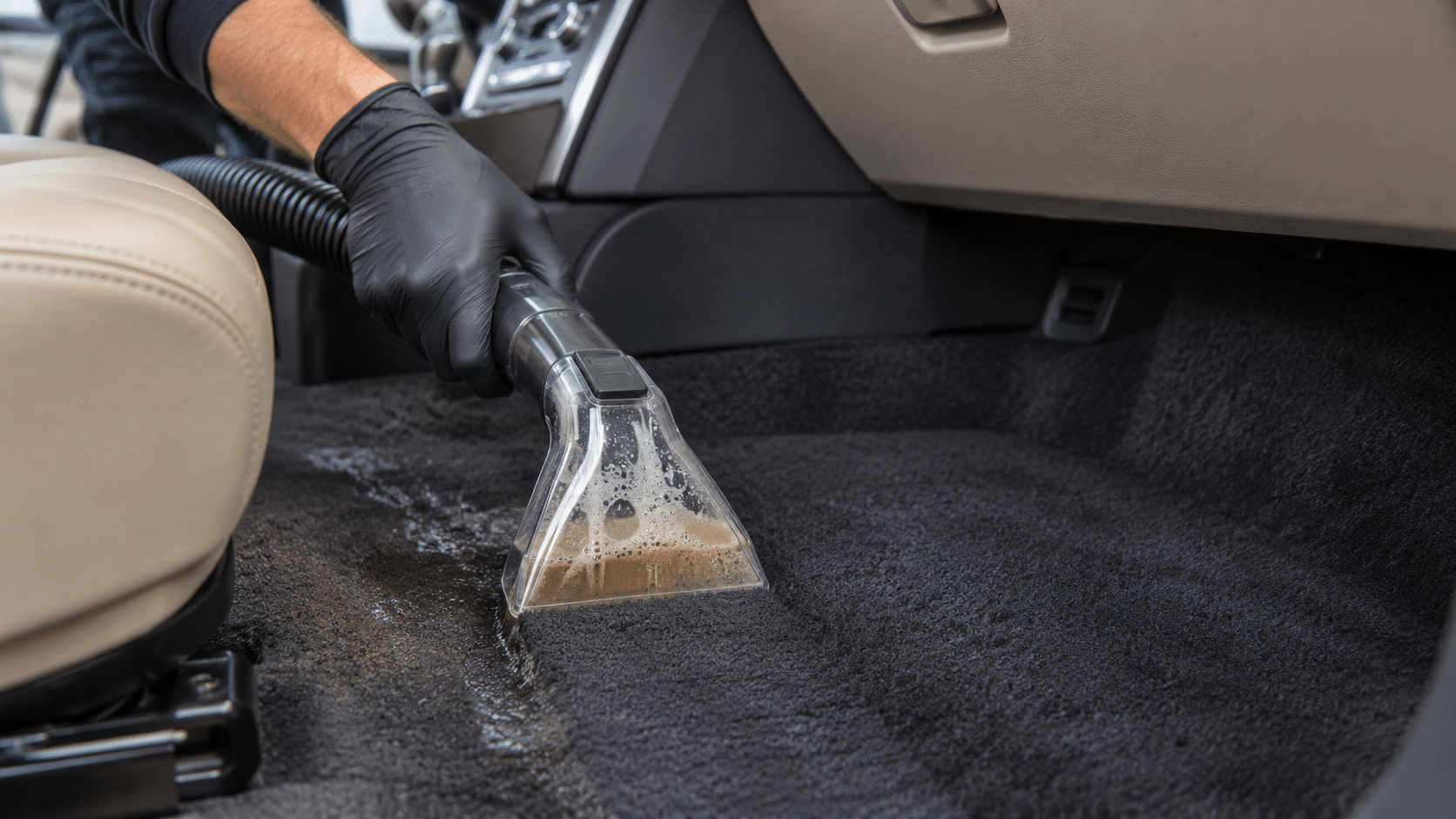
A driver searching for ceramic coating may be evaluating paint preparation, protection options, and the experience of the shop. Someone searching for interior detailing may need help with pet hair, stains, odors, or a family vehicle that needs attention soon. Both could become customers of the same business, but they have different questions before getting in touch.
When both searches lead to a generic “Our Services” page, drivers must guess whether the shop can help. A better local-search strategy is to explain each service clearly, represent the real service area, and give the customer the right next step. This guide complements our auto detailing website checklist rather than repeating its general advice.
Key Takeaways
- Ceramic coating and interior detailing solve different customer problems and deserve distinct service explanations.
- Each page should clarify what the service includes, where it is available, and the best next step.
- The Google Business Profile should accurately describe the real business, services, location, and hours.
- Genuine service photos, honest limitations, and working inquiry forms help visitors decide whether to contact you.
Get the Local Search Checklist for Auto Detailers to check your own service pages as you work through this guide.
Understand the two searches before building pages
Consider two illustrative situations. A driver with a recently purchased SUV searches for ceramic coating near home. They may want an assessment of the current finish and an explanation of application, care, and preparation. Another driver searches for interior cleaning after a spill. That person wants to know whether the shop handles the condition, whether the service can be booked soon, and what details are needed for an estimate.
These are planning examples, not measured keyword demand. The point is that a search phrase is a clue about a decision. Coating is often a higher-consideration protection discussion; an interior detail may be a routine appointment or a difficult-condition assessment. The shop’s actual policies determine the best contact path.
- Ceramic coating: explain the coating service, preparation, possible paint correction, maintenance, and consultation process.
- Interior detailing: explain included surfaces, condition-based exceptions, potential limitations, and appointment or estimate requests.
Package comparison is a separate issue. For that decision, see our detailing package comparison guide.
Give ceramic coating its own useful service explanation
A dedicated ceramic coating page should answer what work is performed, which vehicles are assessed, whether the owner needs an inspection before receiving an estimate, and whether the process takes place in a controlled shop environment. It should distinguish the actual application from any separate cleaning, decontamination, or paint-correction work that may be recommended.
Show how customers begin: a consultation, condition assessment, or quote request, depending on the business. Explain any meaningful prerequisites. Avoid claims that a coating makes paint scratch-proof, removes the need for washing, or provides a guaranteed lifespan unless supported by the specific product and circumstances.
Helpful photographs might show the genuine preparation area, a finished vehicle, or a detail of the coating process. Captions should explain the example instead of calling every finish “perfect.” These details help customers evaluate the service more than a page repeating “ceramic coating near me.”
Give interior detailing a different service explanation
An interior detail page should describe the actual scope: seats, carpeting, mats, hard surfaces, crevices, and cargo areas as applicable. State what is included in a standard interior detail and what requires extra assessment. Severe pet hair, persistent odors, stains, damage, or contamination may require different treatment—or may fall outside the service.
A customer needs to know how to describe the vehicle and request help. Asking for vehicle size, seat material, broad condition, and optional photographs can make the first conversation more useful. However, do not force a visitor to upload a dozen photos before asking a question. Our guide to vehicle-condition photos and intake forms covers that step in detail.
Be careful with outcomes. Cleaning may improve a stain or odor without eliminating it completely. Honest descriptions of limitations are more useful than unsupported promises and reduce disappointing appointments.
Match each page’s title and call to action to the actual service
Use plain page titles, such as “Ceramic Coating in [Real Service City]” or “Interior Auto Detailing in [Real Service City].” These are examples: replace the bracketed location with a genuine location before using them. The first paragraph should clarify where the work is available and who the service suits.
Give each page one primary action. For coating, “Request a Coating Consultation” may fit. For interior detailing, “Request an Interior Detail” or “Ask About Availability” may make more sense. The underlying form can share technology, but its questions should change with the selected service. A coating visitor should not have to navigate a form designed only for routine vacuuming.
On mobile, make the telephone number and inquiry action easy to find. After a submission, display a confirmation explaining what happens next without promising a response time the shop cannot verify.
Make the Google Business Profile consistent with the website
Google explains that local results depend mainly on relevance, distance, and prominence. Complete, accurate profile information can help people understand the business, but no page change or paid request guarantees a particular organic local ranking. Read Google's local ranking guidance for its current explanation.
Check the real business name, category, address or service-area arrangement, hours, telephone number, website link, and actual services. Do not rename the business “Best Ceramic Coating [City]” solely to capture keywords. Google’s Business Profile guidelines call for accurate names, real locations, and a small number of appropriate categories.
If a shop offers coating only on site but interior cleaning both on site and mobile, make that distinction clear on the profile where supported and especially on the relevant website pages. Show genuine photos of the facility and service work, with accurate captions. Reviews should come from real customers; do not manufacture or script testimonials to fill a service page.
Represent the real service area, not an imaginary network of shops
A staffed shop with a visitor-facing location can show its real address and useful arrival details. A mobile business that does not receive customers at its location should follow Google’s applicable service-area and address-display rules; Google explains these choices in its profile editing documentation.
On the website, explain which cities or neighborhoods are genuinely served, when customers should travel to the shop, and where mobile work is offered. If mobile coverage changes by service, show the exception on the service page rather than hiding it in a footer.
A dozen nearly identical city pages with swapped place names rarely answer a dozen different customer questions. Create a specific area page when there is a meaningful reason: an actual facility, a different service mix, a travel restriction, or relevant local examples. Otherwise, a strong service page and an accurate service-area explanation may be clearer.
Use evidence that matches the buyer’s question
A close-up of polished paint can help illustrate exterior protection, but it does little to answer whether a shop can clean pet hair from a vehicle’s rear cargo area. A photo gallery should identify the service and conditions actually depicted. Get permission before sharing customer vehicles, remove identifying details when appropriate, and avoid visual edits that falsely imply an outcome.
For coating pages, show the work setting and representative finish. For interior pages, show relevant interior surfaces and what was cleaned. Place genuine, service-relevant reviews near the supporting explanation when allowed. Neither photos nor reviews should promise that every vehicle will achieve the same result.
Give visitors an inquiry path that works
Imagine someone searching “interior detailing [nearby city]” from a phone. They should quickly answer three questions: Does this detailer serve my location? Can the shop assess my vehicle’s condition? How do I inquire? A visible phone number is useful; a short, service-specific form can be useful when staff are busy.
A coating prospect may benefit from a consultation request that collects the model, approximate paint condition, goals, and preferred contact method. Keep optional details optional when possible. Test every form submission and verify that staff receive the message; our contact-form testing guide explains why delivery matters.
Track inquiry types separately so the team can judge whether the website is bringing relevant work. A higher number of broad inquiries is not automatically better than fewer requests matching services the shop can deliver.
Review the local-search plan monthly
Use available website analytics and Search Console information to see whether the intended pages are appearing for related searches, then compare that interest with actual calls and form inquiries where measurable. Avoid treating an isolated ranking change as proof that one edit succeeded or failed. Location, competitors, device, and demand can all affect the results.
Ask which questions customers still bring up on the phone. If coating prospects routinely misunderstand preparation requirements, improve that section. If interior customers keep asking whether you handle stubborn odors, state the policy clearly. Useful local content should improve as the team learns what visitors need.
A 30-minute website and local profile check
- Open both service pages on a phone and see whether their differences are immediately clear.
- Confirm coating preparation and consultation information matches the shop’s real process.
- Check interior detailing scope, limitations, and inquiry details.
- Verify that the business name, hours, address, and service areas agree with the Google profile.
- Review photos and customer feedback for accurate service descriptions.
- Submit a marked internal test inquiry and confirm someone receives it.
- Write down the three highest-impact missing answers and assign the fixes.
Get the Local Search Checklist for Auto Detailers
Use this one-page checklist to review service explanations, local details, supporting proof, and mobile inquiry paths. Enter your name and email below and we’ll send your copy.
Get Your Free Local Search Checklist for Auto Detailers
Frequently asked questions
Does every detailing service need its own page?
No. Separate pages are most useful for distinct buyer decisions with enough helpful information to stand alone. Minor add-ons can live on a parent page; coating and interior detailing often have substantially different questions.
Should we create a page for every nearby town?
Not by default. Build location-specific content where actual service availability or arrangements differ and can be described usefully. Avoid duplicate pages that simply swap city names.
Will listing ceramic coating guarantee a top Google result?
No. Honest service information is helpful, but local visibility depends on several factors. No single category, service label, or phrase guarantees ranking.
Make the next step easy for the right customer
A useful local-search plan connects a specific need to a service explanation, a truthful service area, and an inquiry path that works. Separate coating and interior intent first; then improve the supporting photos, business profile information, and mobile experience.
If you'd like an outside perspective, Industry Ignitors reviews your website and online presence and identifies specific opportunities to improve clarity, visibility, and the visitor's next step.