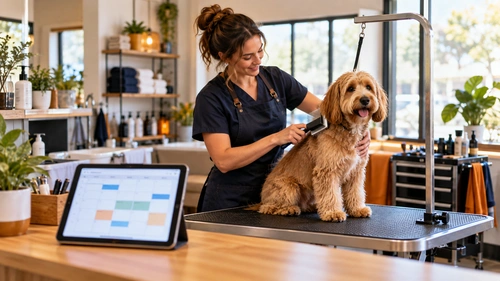
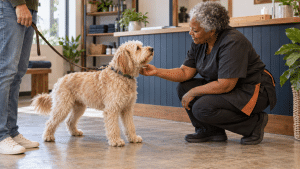
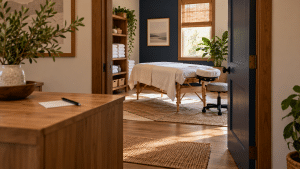
A dog owner remembers after dinner that their pet needs a haircut. They search for a local groomer, open two websites on their phone, and try to work out which business can help. One site explains its services, shows genuine photos, answers basic pricing questions, and makes it easy to request the right appointment. The other jumps straight to a calendar with labels the customer does not understand.
Both businesses may offer online booking. Only one has made the decision easy.
Key Takeaways
- A well-designed website should help pet owners choose a grooming service and answer essential questions before booking.
- Service pages must clearly explain the types of services, applicable policies, and pricing without ambiguity.
- Ensure that the booking options are straightforward and accessible, showing clear pathways for making appointments.
- Your website should prioritize customer trust with real photos, genuine reviews, and practical information about the grooming process.
- Regularly review and update your website to maintain accuracy and usability in pet grooming online booking.
For a pet grooming business, online booking is part of the website experience, not the entire experience. The website helps a pet owner choose you, understand what you offer, and feel confident about bringing in their pet. The booking step should then turn that confidence into an appropriate appointment or request.
That is why the most useful first question is not “Which scheduling app should I buy?” It is “Does my website help the right customers take the next step?”
Want a practical way to review your own grooming website? Jump to the free Pet Grooming Online Booking Checklist after the 15-minute website test.
Your Website Should Do the Work Before Someone Books
A calendar cannot explain why a nervous dog's owner should trust your salon, whether you accept large double-coated breeds, or what a first grooming visit includes. Those are website jobs.
A useful grooming website should help visitors answer three questions before asking them to commit:
- Is this the right grooming business for my pet? Show the kinds of pets and services you accept, where you work, and any meaningful limitations.
- What will the experience be like? Explain your process, show your actual salon or service setup, and make relevant policies easy to find.
- What do I do next? Offer one obvious action: book an appointment, request an appointment, or contact you about a special case.
If those questions go unanswered, installing a booking button merely sends confusion to a different screen. Better website design organizes the answers and the next step into one clear journey.
Build Service Pages Around the Choices Pet Owners Make
Imagine a first-time customer choosing between “Bath & Brush,” “Full Groom,” and “Tidy-Up.” They may know what their dog needs but not which label matches your menu. Your website should explain the options before the booking form asks them to choose.
For each major service, describe what is included, who it is appropriate for, and what might change the appointment. A concise page or clearly organized service section can cover:
- The service itself, in ordinary language rather than shop shorthand.
- Whether nail care, de-shedding, ear cleaning, or other extras are included or separate.
- Whether size, coat type, coat condition, or temperament can affect the time or final price.
- Whether you accept new pets for that service or need an introductory conversation first.
- A direct next step that matches how you actually handle appointments.
You do not necessarily need a separate page for every add-on. You do need enough context that customers can recognize the right service without calling to decode your menu.
Make pricing clear without promising a number you cannot honor
A starting price, a realistic range, or a straightforward explanation of how quotes work can all be useful. The right choice depends on your business. A heavily matted large dog may take substantially different work than a familiar small dog on a routine maintenance visit. State what affects pricing instead of publishing an attractive figure that creates a dispute later.
Put cancellation, late-arrival, deposit, and other booking policies near the point where they matter. Use only policies your business actually applies. The goal is fewer surprises, not a wall of fine print. If you also offer overnight stays, give those customers a separate path for dates, stay requirements, and availability. Our pet boarding website guide shows what that path can include.
Put the Booking Path Where Customers Expect It
Online booking should be easy to reach from the places a visitor is already making a decision: the home page, individual service pages, and your contact page. On a phone, visitors should not have to hunt through a menu to take action.
Use a clear label such as Book a Grooming Appointment when a time will actually be confirmed. If your team must approve new clients or assess a pet first, Request a Grooming Appointment is more accurate. A misleading button can make an otherwise polished website feel unreliable.
A good design also makes room for the exception. The owner of a senior, anxious, or severely matted pet may need to ask a question before selecting a service. Place a short contact option near the booking action, rather than forcing every visitor through a form that cannot handle their situation.
The objective is not to cover the page in buttons. It is to give the right next step at the moment a customer is ready.
Make Booking Fit Your Grooming Process, Not the Other Way Around
The website should support the appointment rules your business already needs. Some routine services for established clients may work well with immediate confirmation. A first-time pet, specialty service, or unpredictable coat condition may need a request that staff review before confirming a slot.
Treat “appointment requested” and “appointment confirmed” as different outcomes. The page, final button, acknowledgment, and follow-up message should all agree. Customers should not drive to your salon assuming a request was approved when it was still awaiting review.
Ask for the information that helps your team prepare: pet name, type, approximate size, service requested, new or returning status, and relevant grooming considerations. Do not turn a simple repeat appointment into an unnecessarily long intake form. If your business collects records or sensitive information, use appropriate secure handling and verify your actual policies and local requirements. Use these new pet grooming client intake questions to decide what you need before accepting a first appointment.
This is where planning the website and its booking connection together matters. Service descriptions, form questions, confirmation wording, and staff workflow should tell the same story. A designer can structure those customer-facing steps around the way your salon operates, whether your appointments are coordinated through an existing scheduling system or another supported process. Technical compatibility must be checked rather than assumed.
Keep the Website Central Even When Booking Uses Another System
Many grooming businesses already have a calendar or client-management tool. That does not mean their main website should become an afterthought—or that every visitor should be sent from a search result straight into an unfamiliar booking interface.
Your business website should remain the primary place where people learn about your services, see your work, understand your policies, and decide to become customers. The appointment tool handles the scheduling step. Those roles complement one another.
Depending on the system, booking might be embedded on a website page or opened through a clearly labeled link. Neither approach is automatically best. The important questions are whether the handoff works on phones, looks trustworthy, preserves the customer's sense of where they are, and accurately returns a booking status.
Before changing any technology, check the actual customer experience. A better service page, simpler navigation, more honest booking language, or a repaired mobile handoff may be more valuable than replacing tools that already serve your staff.
Not sure where your website is losing people? Industry Ignitors builds and manages websites for service businesses. A review of your website and online presence can identify specific opportunities to improve how visitors discover services and move toward an appointment.
Give Pet Owners Reasons to Trust You Before They Commit
Pet owners are leaving a family animal in somebody else's care. They are not evaluating only the length of a haircut or the convenience of a calendar.
Useful trust-building website content includes real photos of your work environment and grooming results, staff introductions when appropriate, the types of pets you work with, practical first-visit instructions, and genuine customer reviews. Explain how drop-off and pickup work, or what customers should expect when a mobile groomer arrives.
Avoid generic claims like “the best groomers in town” when specifics would answer a customer's concern. For example, explaining that new pets receive a consultation before certain services says more about your process than a row of vague superlatives.
The details that matter vary. A salon customer may want to see the facility and parking instructions. A mobile grooming customer may care most about coverage, access, and arrival expectations. Design should make the relevant information easy to locate instead of burying it in a long About page.
Design for Your Business Model
Independent salons: make availability and service fit clear
A one- or two-groomer salon needs a website that communicates what each service involves and when a new client should request an appointment rather than select a fixed slot. If groomers have different specialties, explain those differences without making customers manage your staffing chart.
Mobile groomers: qualify the address before promising a time
A mobile grooming business must consider geography as well as appointment length. Your site should state the service area clearly, ask for the customer's location at the appropriate stage, and avoid implying that every open calendar slot is available at every address. Where routes need review, describe the appointment as a request or arrival window rather than an exact confirmed time.
Multi-location grooming businesses: prevent wrong-location bookings
If you operate more than one salon, customers should be able to identify the correct location before making an appointment. Carry the address, services, and location-specific contact information through the process and confirmation. A successful booking at the wrong location is still a poor experience.
Make the Entire Journey Work on a Phone
A desktop preview is not enough. Open your actual site on a phone and attempt to complete a booking as somebody who has never visited before.
Can you read the service descriptions comfortably? Does the booking link open the expected page? Can you select a service and submit information without sideways scrolling or repeated zooming? Are required fields labeled clearly, and do errors tell customers what to correct? Accessible form labels and instructions are a recognized part of usable web forms, as explained by the W3C Web Accessibility Initiative.
Check the acknowledgment screen and any confirmation email or message, too. Customers need to know whether the appointment is confirmed or awaiting approval, where they should go, and how to contact you if something changes.
A website is not finished merely because the home page looks good. Its essential actions need to work reliably as the site, devices, and connected services change.
Connect Local Discovery to Your Own Customer Journey
A pet owner may find your business through a local search or your Google Business Profile rather than by typing your website address. Your website should support that discovery with accurate location details, clear service pages, useful business information, and an unmistakable route toward booking.
Google provides eligible businesses with ways to add appointment links to their Business Profiles, as outlined in its business-link guidance. If that feature is available for your profile, review the destination carefully. It should support the same service and booking expectations customers see on your site—not take them to a confusing or outdated path.
Your website and online presence should reinforce each other. A polished booking page is less useful if the service information or location details customers encounter elsewhere contradict it.
Review and Improve the Website After Launch
Grooming services, staffing, hours, policies, and booking arrangements change. Your website needs to keep up. A discontinued service or broken appointment link can confuse prospective customers even when the rest of the page is beautifully designed.
Schedule regular checks of your main service pages and booking actions. Test the complete flow after a website update or booking-system change. Ask staff what questions customers keep calling about. Those questions often reveal missing website explanations.
Where your systems provide reliable data, look at useful signals such as completed appointment requests, abandoned forms, service-page engagement, and inquiries that required correction. Do not assume a button-click count equals completed appointments. The point of measuring is to decide what to improve next.
A practical 15-minute website test
Using a phone, pretend you are booking a first-time haircut for a medium-sized dog. Find the right service, understand the price expectations, and follow the booking action all the way to the final message. Repeat with a pet whose needs require staff review. Then test a returning customer's route to rebooking.
Write down the first three places where you hesitate, have to guess, or get an unclear result. Those are useful priorities for a website improvement plan.
Free resource: Pet Grooming Online Booking Checklist. Use the checklist to review your service descriptions, mobile booking experience, trust-building details, and appointment confirmations. Complete the form below to request your copy.
Get Your Free Pet Grooming Online Booking Checklist
Frequently Asked Questions
Do pet groomers need a separate booking website?
Not necessarily. The goal is one coherent customer experience, with your business website as the trusted starting point. Scheduling may be connected through a compatible existing system, an embedded experience, or a clearly explained handoff. What is possible depends on the tools and website setup you use.
Can online booking be added to an existing grooming website?
Often, yes. First assess how clearly your current website explains services and directs visitors to appointments. Then review its technical compatibility and the actual booking journey. A redesign may help when the structure or mobile experience is weak, but it should not be assumed before an assessment.
Should every grooming appointment be confirmed automatically?
No. A familiar routine service may be suitable for immediate confirmation, while a first-time pet, complex coat, or mobile route may require a reviewed request. Your website should explain the difference so customers know what they have submitted.
Your Website Should Help Turn Interest Into Appointments
Online booking is useful when it fits a clear, trustworthy website: one that explains your services, answers the questions pet owners actually have, and leads them to the right next step. The strongest improvements may be in your pages, navigation, copy, mobile design, or ongoing maintenance—not in switching scheduling tools.