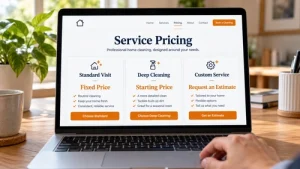
Customers don't always search for a business by name. Often, they start with a problem they need solved. Effective local SEO begins by understanding those questions and helping people find useful answers on your website.
There's a mistake many businesses make when building their websites. They spend so much time thinking about what they want to tell customers that they forget to consider what customers actually want to know. They showcase their equipment, buildings, company history, and years of experience.
There's nothing necessarily wrong with those details. But is that what your customer came looking for?
In sales and marketing, I've always believed one of the most important things we can do is finish the thought the customer is already having. When it comes to website design and local search engine optimization (SEO), that philosophy may be more important than ever.
Key Takeaways
- Businesses must focus on solving customer problems rather than showcasing their own attributes.
- Understanding customer intent drives effective website design and local SEO; it's about answering immediate needs.
- A website should facilitate the sales process by allowing customers to take quick action without unnecessary searching.
- Businesses should identify common customer questions and ensure their website provides clear, direct answers.
- Industry Ignitors advocates customer-focused websites that answer common questions and make the next step clear.
Want to apply this to your own website? Jump to the free Finish the Thought: Website Checklist after the five-question exercise.
Your Customer Has a Problem Before They Have a Search
Imagine someone getting ready to leave for work on a Thursday morning. Their lawn is getting long, family is coming over Saturday for a cookout, and there's no time to mow it.
They pull out their phone and search Google. Are they asking which landscaping company has the most trucks, the biggest building, or 30 years of experience? Probably not.
They're asking: “Is there somebody who can cut my lawn before Saturday?”
For more specifics, see our landscaping website checklist. Now imagine two lawn care websites. One features commercial mowers, a company history, and the owner's passion for landscaping. The other tells visitors that residential mowing is available locally, explains scheduling, and offers a way to request service before the weekend.
Which website is more likely to get the inquiry? The second hasn't proven it's the better landscaping company. It has simply understood what the customer needs right now. It finished the thought.
It's 10 PM. Your Customer Isn't Going to Call You Tomorrow.
Someone discovers their garbage disposal is leaking under the kitchen sink at 10 o'clock at night. They work 8 AM to 5 PM and can't conveniently call a plumber during business hours.
Are they searching for the company with 100 combined years of experience, the coolest logo, or the best-looking service vans? No. They want to know if they can schedule someone to fix the problem right now, without having to call tomorrow.
Imagine finding a website that says: Have a plumbing problem? Request your appointment online anytime. Tell us what's happening, choose your preferred appointment window, and we'll confirm your scheduling details.
That feature might be the difference between winning the customer and losing them to a competitor. Not because the company has more trucks, but because it answered the question the customer was already asking.
A business needn't promise emergency service it doesn't offer. Letting someone request an appointment at 10 PM and honestly explaining when they'll hear back can still make their life easier.
Stop Building Websites Around What You Want to Say
Many business websites are organized around the company: who we are, how long we've been around, our building, our equipment, our team. Those details can establish trust. But the order matters.
Before someone cares about your equipment, they need to know whether you can solve their problem. Before they read your history, they want to know whether you serve their neighborhood. Before they admire your logo, they want to know the cost, availability, and next step.
Photos of your crew may reassure a homeowner about who will visit. Completed-work photos may demonstrate quality. Experience may matter for an expensive repair. Those details should support the customer's decision, not distract from why they visited.
This Is Where Marketing and Local SEO Meet
SEO often gets discussed in terms of keywords, page titles, backlinks, and technical improvements. Those things matter. First, though, we must understand what a person searching is actually trying to accomplish.
“Lawn mowing near me” may indicate someone looking for regular maintenance. “One-time lawn mowing before Saturday” signals an urgent need. “Plumber near me” could be comparison shopping, while “schedule garbage disposal repair online” suggests someone ready to book.
Our service-page content guide shows how to answer customers' questions before they contact you. A useful website recognizes these differences. It explains the services you offer, where you work, the problems you solve, how scheduling works, and what happens next—using the language customers themselves use.
This doesn't guarantee the top position in Google. As Google's local ranking guidance explains, local results mainly depend on relevance, distance, and prominence. Helpful, customer-focused content can address the intent behind relevant searches and give visitors a clearer path to getting in touch.
A Simple Exercise for Every Business Owner
Forget about your business for a few minutes. Imagine what happened in someone's day that caused them to need your services. What are they worried about? What would make solving that problem easier?
- What would this customer type into Google? Think about the problem, not your preferred industry terms.
- What do they need answered first—availability, price, service area, or something else?
- Does your website answer that question clearly, without making them dig?
- Can they take the next step immediately—request an estimate, schedule service, or send a photo?
- Does the website give them enough credible information to choose you with confidence?
Ready to put those questions to work? Use the free Finish the Thought: Website Checklist below to review how well your own website answers them.
Your Website Should Be Part of the Sales Process
A website shouldn't simply be a digital brochure announcing that your business exists. It should be an extension of your sales process.
A good salesperson listens, identifies the need, answers the right questions, and makes the next step natural. Your website should do those same things even when nobody is available to answer the phone.
A leaking pipe. An overgrown lawn. A car that won't start. An air conditioner that's stopped working. People in these situations aren't necessarily looking for the most impressive presentation. They're looking for someone who understands and can help.
Finish the Thought. Earn the Opportunity.
At Industry Ignitors, we approach website design from a marketing perspective first. We want to understand your business, but just as importantly, we want to understand your customers: what brings them to Google, what they hope to find, and what would make choosing your business easier.
Those answers should influence your website's words, layout, features, and direction. Our local SEO checklist for service businesses covers practical ways to improve discoverability. Getting someone to your website is only part of the challenge. The real opportunity is helping them feel they've found exactly what they were looking for.
Finish the thought the customer is already having. Answer the question they're already asking. And make it easy for them to do business with you.
Is Your Website Answering the Right Questions?
Industry Ignitors helps service businesses build websites around real customer needs, with clear messaging, practical features, and an easier path from Google search to customer inquiry.