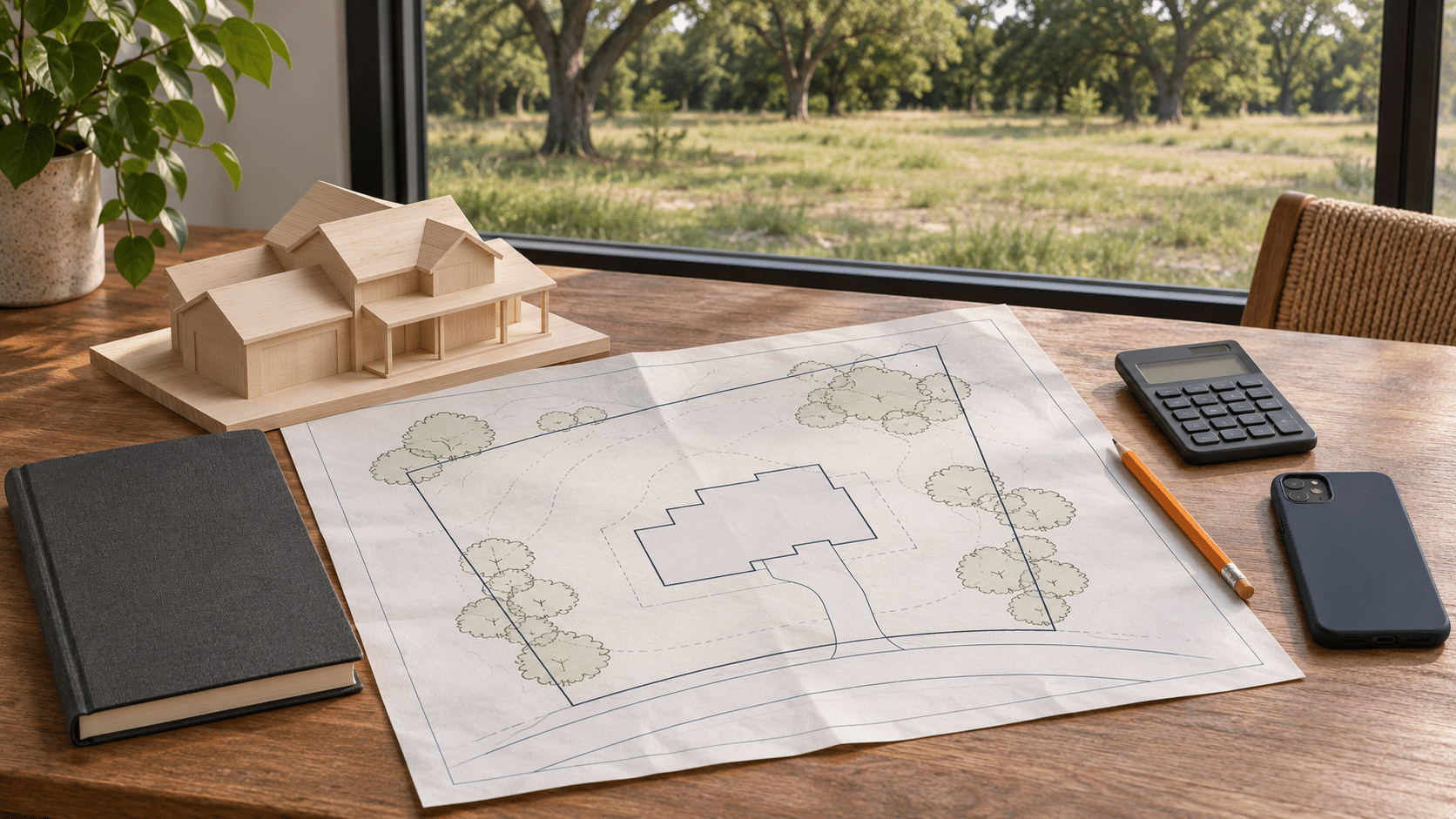
A prospect writes, “We have land, a budget, and want to move in next fall.” Your office still needs to know whether the land is owned or under contract, whether the budget includes the lot, and whether “next fall” means starting construction or unpacking boxes.
A useful home builder inquiry form makes those distinctions before the first call. It gives your team enough context to choose the next conversation while letting an early-stage buyer answer honestly. The goal is a useful handoff, with clear limits on what the form can establish.
Use the Home Builder Inquiry Qualification Worksheet to compare your current fields with the questions and routing examples below.
Decide what the inquiry should accomplish
For a custom builder, a first inquiry usually needs to establish service-area fit, project type, planning stage, and a reliable way to reply. Detailed estimating can follow when the team has reviewed the information it actually needs.
Agree internally on the decisions each field supports. If asking about land ownership changes who responds, keep it. If asking for exterior paint colors changes nothing at this stage, save it for later. Write down the person responsible for each new inquiry and what they check first.
Keep different business models visible. Someone shopping for a completed spec home needs information about that property. Someone requesting a custom build needs a project conversation. Give those visitors separate choices near the beginning, and send active clients to their existing project contact. For broader page structure, start with our custom home builder website guide.
Ask about lot status before demanding an address
Use a required question such as Where are you with land? Offer four clear answers: “Own a lot,” “Under contract,” “Considering a specific parcel,” and “Still looking.” Then show the relevant follow-up questions.
For an owned lot, request the town or county and offer an optional property address or parcel link. A buyer considering a parcel may have only a listing. Someone still searching should be able to name a search area without inventing a street address.
Ask Is there a land-related deadline our team should know about? only when a particular parcel is involved. Offer a date field plus room to explain whether it concerns closing, a review period, or something else. Make clear that submitting a date does not confirm your team's ability to meet it.
A practical set of conditional fields could work like this:
- Own a lot: Location, optional parcel link, and “What do you already know about the site?”
- Under contract: The same details, plus an optional deadline and explanation.
- Considering a parcel: Listing or location, with “What would you like help understanding before proceeding?”
- Still looking: Preferred towns or counties and whether the buyer wants to discuss your building process before choosing land.
Let buyers select “Not sure” about utilities, access, surveys, or site conditions. An unknown answer is useful planning information. Keep site suitability, approvals, and any paid evaluation subject to the appropriate later review; a completed online questionnaire cannot settle them.
Define the budget before asking for a number
A dropdown labeled “Budget” can produce answers your office cannot compare. One household includes land in its figure; another owns the lot and means house construction alone. Ask about both the amount and its scope.
Try What approximate amount are you planning for this project? Follow it with What does that amount include? Choices might be “House construction only,” “House and site work,” “Land, house, and site work,” and “I need help separating these costs.” Match those choices to how your own company discusses projects.
Use ranges based on your current work and pricing practices. If you publish a minimum or starting range, explain what it covers nearby. Avoid borrowing another builder's numbers or treating a previous project's price as a promise for the next one. Our guide to showing prices on a service business website explains ways to give useful context when scope varies.
Include “Still establishing a budget” if you accept early planning conversations. If your team requires a defined construction budget before consultation, state that requirement before the form and explain what information to gather. Let prospects describe unusual circumstances rather than forcing a misleading selection.
Financing status can be an optional planning question: “Exploring options,” “Speaking with a lender,” or “Planning another funding approach.” Keep bank statements, account numbers, credit details, and loan documents out of this first inquiry. The Consumer Financial Protection Bureau explains that construction loans typically release funds as building progresses. Your form can identify a discussion topic; the lender handles financing terms and qualification.
Separate the desired start from the desired move-in
Ask When would you like construction to begin? and Do you have a desired move-in period? as separate questions. Use month, quarter, or broad planning ranges if an exact date would imply more certainty than the buyer has.
Give each question an “Unsure” option. Then ask whether there is a deadline influencing the request, such as a lease ending or a planned relocation. That explanation tells the person following up which expectation needs attention first.
Place a short note beside the timing fields: These dates help us understand your goals. Construction availability and project timing require review and confirmation. Repeat that distinction on the thank-you screen. A field selection should not look like a reserved construction slot.
Do the same with consultation requests. “Preferred time for a call” is different from a confirmed appointment. Use the confirmation language that matches what your office has actually committed to doing.
Build a short first screen and useful follow-up questions
Start with name, email, project type, general location, and lot status. Request a phone number when your follow-up process needs one, and explain how the team will reply. Group budget and timing questions under clear headings rather than presenting one uninterrupted questionnaire.
Ask about plans separately from land. Useful choices include “Ideas only,” “Preliminary design,” and “Plans available for review.” A buyer can have detailed drawings and still be searching for a parcel. If you accept outside plans, say so; if you offer an integrated design process, explain the appropriate starting point.
Make document upload optional or request files later through your established project channel. If uploads are available, explain acceptable file types and size limits before someone tries to submit. A first inquiry should remain usable from a phone without a survey or a complete drawing set on hand.
Keep labels and instructions visible. W3C's form guidance recommends explaining required inputs, formats, and relevant instructions. Put budget definitions beside the budget field and deadline explanations beside the date field. Check that the form still makes sense when placeholder text disappears as someone types.
Give each inquiry an owner and a next action
The following examples show possible office handoffs. Adapt them to your actual service area, consultation policy, and staffing. They are workflow examples rather than automatic acceptance rules.
| Inquiry situation | First review | Useful next action |
|---|---|---|
| Owned lot, defined construction budget, preliminary plans | Confirm location and project scope | Arrange the appropriate consultation or plan-review discussion |
| Parcel under contract with a stated deadline | Check the date and what assistance is requested | Tell the buyer whether your team can review the request within that window |
| Still looking for land, budget includes the purchase | Clarify the budget scope and search area | Explain your early planning service or what to gather before returning |
| Desired move-in period appears incompatible with current availability | Review the goal with the person managing new projects | Explain current limitations before suggesting a meeting |
| Existing client asking about selections or warranty | Identify the active project or service contact | Transfer the request with its original message intact |
Send the receiving team the selected answers and free-text explanation. Avoid an automated “unqualified” rejection merely because a buyer chose “Not sure.” An unclear answer may call for one short clarification, while a genuinely unsupported project needs an honest explanation.
A confirmation could read: We received your project inquiry. Our team will review the location, scope, budget information, and timing goals before contacting you about the next step. This request does not reserve a consultation or construction start date. Add a response window only when someone owns it and the team can meet it.
Test the information all the way to the first reply
Run three clearly labeled tests: an owned lot with plans, a parcel under contract, and a buyer without land or a settled budget. Use a phone for at least one test. Check that switching lot status hides irrelevant questions and never leaves an invisible required field blocking submission.
Follow each test into the office inbox. Verify that budget scope and both timing answers arrive with the inquiry, that someone owns the next action, and that the confirmation matches the intended route. Use our contact form testing guide to check delivery as well as the screen message.
Review the first real inquiries after a change. Look for repeated clarification questions, buyers selecting the wrong project type, and dates the office has to explain again. Change the field or nearby wording responsible for the confusion, then rerun the affected test.
Get the Home Builder Inquiry Qualification Worksheet
Use this one-page worksheet to check lot branches, budget definitions, timing questions, and office handoffs. Enter your name and email below to receive the PDF.
Get Your Free Home Builder Inquiry Qualification Worksheet
Get a Free Website Review
Industry Ignitors helps small businesses get found online and turn more visitors into customers. We can review your website and online presence and identify specific opportunities to help prospective buyers understand your process and send a more useful inquiry.